Sunday, February 14, 2016

All Indigenous people in Brazil

1mi people, 305 ethnic groups speaking 274 different Languages in Brazil
There is a whole universe of cultures in Brazil, that even the vast majority of Brazilians do not have a clue of their existence. There are approximately one million people, belonging to 305 ethnic groups speaking 274 different languages. Blemya did her homework and brought together more than 241 ethnic groups of Indigenous people in Brazil.

Read This article in Portuguese

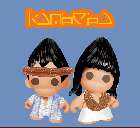
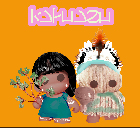
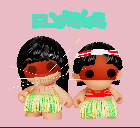
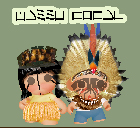
In order not to stigmatize real people and their cultures, and to eliminate the 'boredom', Blemya has  adopted the Tupi-Pop profile of her blogs, and decided to depict each race through Toy Arts, and just like the hundreds of Pokemon, Naruto characters, etc., indigenous ethnic groups will be subject of easy understanding to the Otakus* of the Tupi-Pop culture.

Toy Art of ethnic groups, Orishas, legends and other Brazilians by Luiz Pagano - the best way to learn is having fun without stigmatizing the individual (if you want to know more, please contact us at contato@blemya.com )

 Pib Socioambiental beautiful work served as framework for this study, it was the most organized and well arranged research on the subject, so by clicking on a specific ethnic group that does not have an illustrated character, the link will led you to original site. Unfortunately, texts still are written in Portuguese, but in time, I’ll translate all of them into English.

From the discovery of Brazil by the Portuguese in 1500, Europeans began to have a major contact with the Tupi-Guarani tribes who were spread across almost the entire Brazilian coast. The Tupi-Guarani called the indigenous people of different languages as 'Tapuia' - which in their language meant "enemy". The word ‘Tapuia’ was incorporated by Europeans and they started to believe that there were only two major indigenous nations: the Tupi-Guarani and Tapuia.

The Tapuias was considered by Europeans as more primitive, difficult to catechize, and to conquer, so they were fought and exterminated - many of the individuals and their tribes have disappeared so completely that don’t exist even a single direct record of their existence.
watch this and know a little bit more about the project

In the nineteenth century, the German scientist Carl Friedrich Philipp von Martius traveled to a large part of Brazilian territory and proposed a division of Brazilian Indians according to a linguistic criterion. Based on this criterion, he created the ‘Gê’ group, which included tribes that spoke similar languages and who used to call themselves by utilizing the gê particle, meaning "father", "boss" or "ancestor".  An alternative name, according to Martius itself, would 'cram' because in this group was also widely used to cran particle ("son", "Down") for the appointment of the tribes. Much of the ancient tribes of Tapuias was encompassed by the Gê group.

In the early twentieth century, anthropologists began to reject the name "Tapuia" and adopted the name "GES" for this other group of language families. In 1953, the Brazilian Association of Anthropology took the form "Gê" in lieu of "Ge". With the spelling reform, which advocated the use of "j" instead of "g" for the coming terms of Brazilian indigenous languages, the word "Gê" came to be spelled "JJE".

Because they have similarities in their origins is possible to classify the linguistic groups and linguistic trunks - the linguist Morris Swadesh has an important work of classification that besides the genetic lineage, took into account the method known as glottochronology, which is determined primarily from a basic vocabulary of a hundred or two common terms, which are the true cognates (words that demonstrate being derived from a single ancestral word). A rate of 81% of cognates indicate five centuries since the two languages are separated; 36% indicate approximately 2,500 years of separation; 12% some 5,000 years.

Unfortunately the native languages of indigenous Brazilian tribes are among the most endangered in the world. If you lived in the village of São Paulo de Piratininga (today the megalopolis of São paulo) 300 years ago, you would be speaking Indian language. Only 2 out of every 5 inhabitants of the city knew the Portuguese. So in 1698, the provincial governor, Artur de Sa e Meneses, begged Portugal to only send priests who knew "the general language of the Indians", because "these people can not be catechized in another language"

For reasons like these, according to a classification made by the National Geographic Society and the Living Tongues Institute for Endangered Languages, the Indian languages started being replaced by Spanish and Portuguese in Brazil's border with Bolivia and Paraguay, in the Andes and the Chaco region, the researchers found. For example, less than 20 people speak Ofaié, and less than 50 are able to express in Guató.

Most countries were built on top of people's destruction, Brazil is one of the few that still has an important chance to redeem its identity and to learn from the remnant.

In order to better understand Brazilian natives, the groups were divided in 20 ethnic groups, four of them are the most important, the Tupi, Macro Ge, Arawak and Karib, as described below:

Tupi group Toy Art
1 - Tupi Group

The term "Tupi" has two meanings: one generic and one specific. The general sense of the term refers to the Indians who inhabited the Brazilian coast in the 16th century and spoke the language Tupi old. The specific meaning of the term refers to the Indians who inhabited the region the Brazilian coast including the current city of São Vicente, at the same time, were the first Indians to have contact with the Portuguese who arrived here.

The Tupi Group is divided into 10 families: Tupi-Guarani, Arikém, Aweti, Juruna, Mawé, Puroborá, Mundurukú, Ramarama and Tupari.


Macro Jê group Toy Art

2 - Macro-Ge Group

The languages of the Macro-Ge trunk bequeathed a few words to the Portuguese language, though not as eloquently as the languages of the Tupi. Generally, they are place names in southern Brazil originated in Caingangue language as Goioerê, Xanxerê, Erechim, Erebango Ere Campo, Goioxim, Brazil, Nonoai, etc.

Arwak group Toy Art

3 – Arwak Group

The Arawak languages, Arawaks, Aruak Arawak or form a family of Amerindian languages of South America and the Caribbean Sea. Arawak languages are spoken in much of the territory of the Americas to the south to Paraguay and northern countries of the north coast of South America, such as Suriname, Guyana and Venezuela.


According to linguist Aryon Rodrigues, this language, also known as Lokono, was spoken in some West Indian islands like Trinidad. When Europeans inciaram its colonization of the Caribbean, Arawak then divided and disputed the same place with the Carib, and went with one another that those had their first contact with the native population and their languages. As Karib, the Arawak name came to be used to designate the set of languages found within the continent and related to the Arawak language. Also according to this author, this set of languages was also called Maipure or Nu-Arawak and corresponds to what Carl Friedrich von Martius for more than a century called Guck or Coco.

Karib group Toy Art


4 - Karib Group


The Carib languages, Caribas, Caraibas, Caribbean are an indigenous language family of Central America and South America. It is scattered throughout northern South America, from the mouth of the Amazon River to the Colombian Andes, but also appears in central Brazil. The Carib languages are relatively close together.

Aikaná group Toy Art

5 - Aikaná Group

African (also known as Aikanã, Massaca , Massaka, Huari, Corumbiará, Kasupá, Munde, Tubarão, Winzankyi) is a Brazilian indigenous people. They speak the language Aicanã. The Aikanã live in the state of Rondônia, in the Guaporé River basin. Its three villages are part of the Indigenous Land Tubarão Latundê, located 100 kilometers from the border with Bolivia and 180 kilometers from the nearest city, Vilhena.
Arawá group Toy Art

6 - Group Arauá

The Arawá, (also known as Arauá, Deni, Jarawara, Kanamanti, Kulina, Paumari, Jamamandi and Zuruahá) are an indigenous group that inhabits the southwestern Brazilian state of Amazonas, specifically the "Deni Indigenous Land", located in the municipalities Itamarati and Tapauá.

The first contacts with the white man Arawá probably happened in the late nineteenth or early twentieth century.

The Arawá are among the indigenous groups of the region rivers Juruá and Purus which, in the 1940s, have suffered the impact of the second rubber boom, which attracted thousands of migrants. Through these came diseases, violent territorial disputes and exploitation of indigenous labor. Since then, Arawá had to wait decades to have their guaranteed territorial rights, and need to start a self-demarcation of the land campaign, with the support of some NGOs, to then get the official demarcation, which was only completed in August 2003.
Guaikuru group Toy Art

7 - Guaikurú Group

The term refers Guaicurus indigenous groups whose languages belong to Guaicuru linguistic family. They were notorious for being a warrior tribe that used horses for hunting and attacks. Migrated to Brazil, in the region of Mato Grosso do Sul and Goiás, fleeing from colonization in the northern region of Paraguay.
Iranxé group Toy Art

8 - Group Iranxé


The Irantxe (are also known as Iranxe), are located in Mato Grosso-MT and according to data from FUNASA-2010 has a population of 379 inhabitants. Manoki, as they call themselves, are best known as Irantxe, whose language has no similarity with other linguistics families. His story, however, is not very different from most of the Indians in Brazil, were virtually decimated as a result of massacres and diseases from contact with whites. In the mid-twentieth century, most of the survivors saw no alternative but to live in a Jesuit mission, responsible for the profound socio-cultural disintegration of the group.

Jabuti group Toy Art


9 - Jabuti Group

The Jabutis (they are also known as Djeoromitxí and Arikapu) are an indigenous group that inhabits the southern Brazilian state of Rondônia, the more precisely Rio Branco Indigenous Areas, Guaporé River and Indigenous Land Jabuti. In the past the tribe was very threatened by the presence of garimpeiros in its original area, a fact partly resolved by the demarcation of their lands.

Most jabuti language speakers also speak Portuguese and there are others who still know how to communicate through other indigenous languages.
Kanoê group Toy Art

10 - Kanoê Group

The Kanoê (brasílic ethnonym) or canoes are an indigenous group that inhabits the southern Brazilian state of Rondonia, specifically the Rio Branco Indigenous Lands and Rio Guaporé.

Massacre

In 1985, the canoes farmers have suffered attacks in Corumbiará, municipality that gives name to the documentary Franco-Brazilian Vincent Carelli. It is not known how many indigenous people (among them the Akuntsu ethnicity) were killed, but it is speculated that it was using a bulldozer, it serves to clear large areas.
Katukina group Toy Art

11 - Katukina Group

Catuquinas or Katukina is a denominated a name to at least three indigenous groups:

The first, the Katukina language family, called Katukina Rio Biá, located on the river Jutaí region in southwestern Amazonas state, on indigenous lands Paumari the Cuniuá, Paumari Lake Paricá, Rio Biá and Tapauá.

Katukina are also called two groups of linguistic pano family, located in the state of Acre. But neither of these two pano groups recognize the term "Katukina" as a self. One of them, located on the banks of the Envira river, near the town of Feijó, calls himself-Shanenawa and would be part of a clan Yawanawá people.

"Since time immemorial, the Yawanawá, the people of the jawbone, occupy the headwaters of the Gregório River, an affluent of the Juruá, geographically belonging to the municipality of Tarauacá, Acre. Its current population is 636 people and belongs to the linguistic branch Pano. The families are distributed in communities Nova Esperança, Mutum, Escondido, Tiburcio and Matrinxã. the communities are formed by Yawanawá families, Arara, Kãmãnawa (people of the jaguar), Iskunawa (Japó people), Ushunawa (people of color white), Shanenawa ( people blue bird), Rununawa (the snake people) and Kaxinawá (the bat people). "

But the other group, called Katukina-Pano, inhabitant of villages located on the banks of Campinas and Gregório rivers, does not recognize any meaning in the name "Katukina" in their language, but accepts the name. They tell their members that she was "given by the government." However, in recent years, young indigenous leaders have encouraged the consolidation of the designation of Noke Kuin, Noke Noke Kui or Koi (in Portuguese, "real people") for the group. Internally, six other self-denominations are used which refer to the six clans in which the group is divided. It was observed that these names are almost identical to the names of some clans Marubo people, with which Katukina-called Pano present several other linguistic and cultural similarities.
Kwazá group Toy Art

12 - Kwazá Group


The Kwazá (also Coaia or Koaia ) are an Amerindian people inhabiting the southern Brazilian state of Rondônia, the region where they lived since time immemorial. After opening the BR-364 road, in the 1960s, farmers drove them out of fertile land where they lived and in 2008 formed a society of only 40 individuals, living in the Indigenous Land Tubarão Latundê in the municipality of Chupinguaia, along with Aikanã and Latundê. Most of them are mixed with Aikanã. There's another mixed family Kwazá and Aikanã living in Indigenous Kwazá the San Pedro River. They speak a language isolate that is threatened with extinction.
Maku group Toy Art


13 - Maku Group

The Macus is a Brazilian indigenous group divided in subgroups called Daw, Hupda, Iuhupde and Nadebe.

The term, however, may refer to an indigenous group inhabiting the Brazilian state of Roraima and that would have merged with iecuanas the twentieth century. According to Jorge Pozzobon (1955-2001) is common in the region the distinction between so-called "river Indians", speaks of Tukano and Arawak, and the "kill the Indian," says Maku. The approximately three thousand Maku (1999) are distributed in an area between Brazil and Colombia in an area of approximately 20 million hectares, which are dispersed by patches of forest, limited the north by the river Guaviare (Colombian tributary of the Orinoco River) north by the Negro river, south by the river Japura and the southeast by the river Uneiuxi (Brazilian affluent of Negro).
Murá group Toy Art

14 - Mura Group

The Mura is a Brazilian indigenous group that inhabits the center and the east of Amazonas state, specifically in indigenous areas Boa Vista, Capybara, Cuia, Cunha, Hawk, Guapenu, Itaitinga, Lake Aiapoá, Murutinga Christmas / Happiness, Onça, Padre, Paracuhuba, Recreation / San Felix, San Pedro, Tracajá, Trench, Méria, Miratu, Tabocal and Pantaleão.
Nambikwara  group Toy Art

15 - Nambikwara Group

The Nambikwara, also called Anunsu, Anunzê, Nambikwara, Nambikuára, Nambikwara, Nhambikuara or Nhambiquara are a Brazilian indigenous people. They are located in western Mato Grosso and Rondônia.

In 1999 amounted to 1145 individuals. Their customs are hunting and gathering and rarely had contact with non-Indians until 1965, when non-Indians began to invade their land for mining and illegal logging.

Its subgroups are Nambiquara do Campo (Mato Grosso and Rondonia), North Nambikwara (Mato Grosso and Rondonia), the Nambikwara Sararé (Mato Grosso) and Southern Nambikwara (Mato Grosso).
Pano group Toy Art

16 - Group Pano

Pano are indigenous groups whose languages belong to the Pano linguistic family. In the past, they were called bearded.

According to some linguists, the term pejorative pano: comes from panobu, which would mean "the willows", not being a self-designation of these people, but rather, a heteronym given by people belonging to other language families.

People belonging to the Pano family are located in the far west of the Brazilian Amazon and in the region corresponding to the Andean piedmont, Peru.


All people whose names are terminated by -nawa suffix -náua or -nauá belong to this group: Kaxinawá, Yawanawá, Shawanawá (or Shawadawã) Shanenawá, Jaminawa, among others. Also belong to this group and the Marubo Corubo (Javari Valley) and Shipibo (Peru Juruá-Ucaially). The Katukina Acre also speak a Pano language family (not to be confused with the Katukina of Amazonas). Apparently -náua suffix or -nawa means "people" or "people", plus a given name indicates that this people clan belongs. Eg Shanenaua (people of Blue Bird), Yawanawá (jawbone people), etc. People Pano or nawa share not only linguistic similarities but also in traditional songs, in ritual practices in traditional stories and body painting, and other aspects of their culture.
Trumai group Toy Art


17 - Trumai Group

The Trumai an isolated language and really committed, was the last group to arrive at the Xingu. There are now only 30 speakers and children no longer learn the language, preferring to speak Portuguese, although some of them also speak other languages Xingu, as Kamayará the Aweti or Suyá.
Tikuna group Toy Art

18 - Tikuna Group

The Tikuna (Tikuna, Tucuna or Maguta) is an Amerindian people who live currently the border between Peru and Brazil and the Amazonian Trapezium, in Colombia. Form a society of more than 50 000 individuals, split between Brazil (36,000), Colombia (eight thousand) and Peru (seven thousand), being the most numerous indigenous people of the Brazilian Amazon.
Tukano group Toy Art

19 - Tukano Group

The Indians who live on the banks of the Uaupés River and its tributaries - the Tiquié, Papuri, Querari and other minor rivers - today belong to 17 ethnic groups, many of which also live in Colombia, in the Uaupés and Apaporis river basins (tributary of the Japurá), the principal tributary of which is the Pira-Paraná River.

These indigenous groups speak languages of the Eastern Tukanoan family (only Tariana is of Arawak origin) and participate in a wide-ranging network of exchanges, which include marriages, rituals and commerce, which form a definite socio-cultural complex, called the “social system of the Uaupés/Pira-Paraná”. This, in turn, is part of a broader culture area, including populations of the Arawak and Maku language families.

Ethnic groups: Arapaso, Bará, Barasana, Desana, Karapanã, Kotiria, Kubeo, Makuna, Mirity-tapuya, Pira-tapuya, Siriano, Tariana, Tukano, Tuyuca, Tatuyo, Taiwano, Yuruti (the last three live only in Colombia)
Txapakura group Toy Art


20 - Group Txapakura

The Txapakura, came from regions basins, streams, affluent and headwater streams located in southwestern Amazonia. Occupied regions of the Lage river basins and river basins of Ouro Preto, the igarapé of the Grotto, the stream Santo André and the stream Rio Negro, the right bank affluent of Mamore where it came from one of their denominations.

However, until the early twentieth century they remained isolated, perhaps because they lived in hard to reach areas or little economic interest. The Waris, the Txapakuras group has been mentioned for the first time in history by Colonel Ricardo Franco in 1798, found the riverbanks Pacaás Novos.

This situation has to change with the development of the rubber vulcanization process, which took place in the mid nineteenth century, which led to the search for this raw material in the forests, hitherto little explored.
Yanomami group Toy Art

21 - Yanomami Group

The Ianomâmis, Yanomami Yanoama Yanomami Yanomami or are hunters and farmers Indians who inhabit Brazil and Venezuela. It consists of four subgroups: Yanomae, Yanomami Sanima and Ninam. Each group speaks its own language: together they make up the Yanomami language family. The Yanomami tribe is the seventh largest Brazilian Indian tribe, with 15,000 people distributed in 255 villages related to each other to a greater or lesser degree. Northwest of Roraima, are situated 197 villages totaling 9506 people, and the north of the Amazon, are situated 58 villages totaling 6510 people.

-----

·      Otaku (お た く?) Is a term used in Japan and other countries to describe fans of anime and manga. However, in Japan, the term can be used to describe a fan of anything in a large excess.

·      The word otaku in Japanese originally a respectful treatment in the second person (お 宅? Lit. his home), or "your house", a kind of pronoun most archaic Nipponese. This reference arose from the combination of the economic prosperity of Japan after the war, the intense relationship between consumption and media technologies and the appeal of the visual references of manga (comics) and anime (animation) .Otaku became assigned to people who spent a lot of time at home, consuming such a culture.

·      The humorist and columnist Akio Nakamori noted that the word was widely used among anime fans and popularized around 1989, when used in one of his books.


#_______   NomesOutros nomes ou grafiasFamília linguísticaInformações demográficas
1AikanãMassacá, Tubarão, Columbiara, Mundé, Huari, AikanáAikaná

UF / PaísPopulaçãoFonte/Ano
RO350Siasi/Sesai 2014
2AikewaraSuruí, Sororós, AikewaraTupi-Guarani
UF / PaísPopulaçãoFonte/Ano
PA386Siasi/Sesai 2014
3AkuntsuAkunt'suTupari
UF / PaísPopulaçãoFonte/Ano
RO4Siasi/Sesai 2016
4AmanayêAmanaié, AraradeuaTupi-Guarani
UF / PaísPopulaçãoFonte/Ano
PA178Siasi/Sesai 2014
5AmondawaTupi-Guarani
UF / PaísPopulaçãoFonte/Ano
RO126Siasi/Sesai 2014
6AnacéAnacé
UF / PaísPopulaçãoFonte/Ano
CE2018Siasi/Sesai 2014
7AnambéTupi-Guarani
UF / PaísPopulaçãoFonte/Ano
PA161Siasi/Sesai 2014
8AparaíApalai, Apalay, Appirois, Aparathy, Apareilles, AparaiKarib
UF / PaísPopulaçãoFonte/Ano
PA414Siasi/Sesai 2014
Guiana Francesa40Eliane Camargo 2011
Suriname10Eliane Camargo 2011
9ApiakáApiacáTupi-Guarani
UF / PaísPopulaçãoFonte/Ano
MT. PA850Siasi/Sesai 2014
10ApinajéApinaié, Apinajés, Timbira, ApinayéJê
UF / PaísPopulaçãoFonte/Ano
TO2277Siasi/Sesai 2014
11ApurinãIpurina, PopukareAruak-maipure
UF / PaísPopulaçãoFonte/Ano
AM, MT,RO9487Siasi/Sesai 2014
12AranãAranã
UF / PaísPopulaçãoFonte/Ano
MG362Funasa 2010
13ArapasoArapasso, ArapaçoTukano
UF / PaísPopulaçãoFonte/Ano
AM448Siasi/Sesai 2014
14ArapiunsArapium
UF / PaísPopulaçãoFonte/Ano
2204Siasi/Sesai 2012
15AraraArara do Pará, UkaragmaKarib
UF / PaísPopulaçãoFonte/Ano
PA377Siasi/Sesai 2014
16Arara da Volta Grande do XinguArara do MaiaArara
UF / PaísPopulaçãoFonte/Ano
PA143Siasi/Sesai 2012
17Arara do Rio AmôniaApolima-Arara, Arara Apolima
UF / PaísPopulaçãoFonte/Ano
AC434Siasi/Sesai 2014
18Arara do Rio BrancoArara do Beiradão, Arara do AripuanãArara
https://indigenasbrasileiros.blogspot.com/2020/05/arara-do-rio-branco.html
UF / PaísPopulaçãoFonte/Ano
MT249Siasi/Sesai 2014
19Arara ShawãdawaArara do Acre, ShawanauaPano
UF / PaísPopulaçãoFonte/Ano
AC677Siasi/Sesai 2014
20ArawetéAraueté, BïdeTupi-Guarani
UF / PaísPopulaçãoFonte/Ano
PA450Siasi/Sesai 2012
21ArikapúJabuti
UF / PaísPopulaçãoFonte/Ano
RO37Siasi/Sesai 2014
22AruáMondé
UF / PaísPopulaçãoFonte/Ano
RO94Siasi/Sesai 2014
23AshaninkaKampa, AshenikaAruak
UF / PaísPopulaçãoFonte/Ano
AC1291Siasi/Sesai 2012
Peru97477INEI 2007
24Asurini do TocantinsAkuawa, AsuriniTupi-Guarani
UF / PaísPopulaçãoFonte/Ano
TO516Siasi/Sesai 2012
25Asurini do XingúAssurini, AwaeteTupi-Guarani
UF / PaísPopulaçãoFonte/Ano
PA165Siasi/Sesai 2012
26AtikumAticum

https://indigenasbrasileiros.blogspot.com/2020/05/atikum.html
UF / PaísPopulaçãoFonte/Ano
PE, BA7929Siasi/Sesai 2012
27Avá-CanoeiroCanoeiro, Cara-Preta, CarijóTupi-Guarani
UF / PaísPopulaçãoFonte/Ano
TO, GO, MG25Siasi/Sedsi 2012
28AwetiAwytyza, Enumaniá, Anumaniá, AuetöAweti
UF / PaísPopulaçãoFonte/Ano
MT195Ipeax 2011
29BakairiBacairi, Kurã, KurâKarib
http://indigenasbrasileiros.blogspot.com/2015/12/bakairi.html
UF / PaísPopulaçãoFonte/Ano
MT930Siasi/Sesai 2012
30BanawáArawá
UF / PaísPopulaçãoFonte/Ano
AM200Siasi/Sesai 2012
31BaniwaBaniva, Baniua, Curipaco, WalimanaiAruak
UF / PaísPopulaçãoFonte/Ano
AM6243Siasi/Sesai 2012
Colombia70002000
Venezuela2408INE 2001
32BaráBara tukano, WaípinõmakãTukano
UF / PaísPopulaçãoFonte/Ano
AM22Siasi/Sesai 2012
Colombia2961988
33BarasanaPanenoáTukano
UF / PaísPopulaçãoFonte/Ano
AM47Siasi/Sesai 2012
Colombia9391998
34BaréHaneraAruak
UF / PaísPopulaçãoFonte/Ano
AM10623Siasi/Sesai 2012
Venezuela2815INE 2001
35BorariBorari
UF / PaísPopulaçãoFonte/Ano
PA, AM1116ISA 2014
36BororoCoxiponé, Araripoconé, Araés, Cuiabá, Coroados, Porrudos, BoeBororo
UF / PaísPopulaçãoFonte/Ano
MT1686Siasi/Sesai 2012
37Canela ApanyekráCanela, TimbiraJê
UF / PaísPopulaçãoFonte/Ano
MA1076Siasi/Sesai 2012
38Canela RamkokamekráCanela, TimbiraJê
UF / PaísPopulaçãoFonte/Ano
MA2175Siasi/Sesai 2012
39ChamacocoSamuko
UF / PaísPopulaçãoFonte/Ano
MS40Grumberg 1994
Paraguai1515II Censo Nacional Indígena 2002
40CharruaCharrua
UF / PaísPopulaçãoFonte/Ano
Argentina676INDEC 2004
RS27Siasi/Sesai 2012
41ChiquitanoChiquitoChiquito
UF / PaísPopulaçãoFonte/Ano
Bolivia108206Censo Nacional 2001
MT473Siasi/Funasa 2012
42Cinta largaMatetamãeMondé
UF / PaísPopulaçãoFonte/Ano
MT, RO1758Siasi/Sesai 2012
43CoripacoCuripaco, Curripaco, KuripakoAruak
UF / PaísPopulaçãoFonte/Ano
AM1504Siasi/Sesai 2012
Colombia7827Arango e Sánchez 2004
Venezuela4925INEI 2001
44DeniJamamadiArawá
UF / PaísPopulaçãoFonte/Ano
AM1394Siasi/Sesai 2012
45DesanaDesano, DessanoTukano
UF / PaísPopulaçãoFonte/Ano
AM2028Siasi/Sesai 2012
Colombia20361998
46DjeoromitxiJabotiJabuti
UF / PaísPopulaçãoFonte/Ano
RO215Siasi/Sesai 2012
47DowMaku, Kamã, Nukak MakuMakú
UF / PaísPopulaçãoFonte/Ano
AM110DSEI Alto Rio Negro 2013
48Enawenê-NawêEnauenê nauê, Salumã, Enawenê-nawêAruak
UF / PaísPopulaçãoFonte/Ano
MT641Siasi/Sesai 2012
49Fulni-ôYaté
UF / PaísPopulaçãoFonte/Ano
PE4687Siasi/Sesai 2012
50Galibi do OiapoqueGalibi, KalinãKarib
UF / PaísPopulaçãoFonte/Ano
AP82Siasi/Sesai 2012
Guiana Francesa3000OkaMag 2002
Suriname3000OkaMag 2002
Venezuela11150OkaMag 2002
51Galibi-MarwornoGalibi do Uaçá, AruáCreoulo
UF / PaísPopulaçãoFonte/Ano
AP2377Siasi/Sesai 2001
52Gavião ParkatêjêGavião do Mãe Maria, Gavião do Oeste, Timbira, ParkatejêJê
UF / PaísPopulaçãoFonte/Ano
PA627Siasi/Sesai 2012
53Gavião PykopjêGavião do Maranhão, Gavião Pukobiê, Gavião do Leste, Timbira, PykopcatejêJê
UF / PaísPopulaçãoFonte/Ano
MA740Siasi/Sesai 2012
54Guajá / Awa-GuajáAvá, AwáTupi-Guarani
UF / PaísPopulaçãoFonte/Ano
MA365Siasi/Sesai 2012
55GuajajaraGuajajara, TeneteharaTupi-Guarani
UF / PaísPopulaçãoFonte/Ano
MA26040Siasi/Sesai 2012
56Guarani Kaiowá, Mbya, ÑandevaTupi-Guarani

UF / PaísPopulaçãoFonte/Ano
Argentina6500CTI/Grünberg 2008
Bolivia78359INE/Bolivia 2001
MS,SP,PR,RS,RJ,ES57923Siasi/Sesai 2012
Paraguai41200CTI/Grünberg 2008
57GuatóGuató
UF / PaísPopulaçãoFonte/Ano
MS, MT374Siasi/Sesai 2012
58HixkaryanaHixkarianaKarib
https://indigenasbrasileiros.blogspot.com/2019/04/hixkariana.html
UF / PaísPopulaçãoFonte/Ano
PA,AM1242Siasi/Sesai 2012
59HupdaMaku, MacuMakú
UF / PaísPopulaçãoFonte/Ano
AM1000Patricia 2012
Colombia500Patriciia 2012
60IkolenGavião de Rondônia, Gavião Ikolen, DigutMondé
UF / PaísPopulaçãoFonte/Ano
RO603Siasi/Sesai 2012
61IkpengTxicão, IkpengKarib
UF / PaísPopulaçãoFonte/Ano
MT454Siasi/Sesai 2012
62IngarikóAkawaio, KaponKarib
UF / PaísPopulaçãoFonte/Ano
RR1231Siasi/Sesai 2012
Guiana40001990
Venezuela7281992
63Iranxé MonokiIrantxe, ManokiIranxe
UF / PaísPopulaçãoFonte/Ano
MT396Siasi/Sesai 2012
64JamamadiYamamadi, KanamantiArawá
UF / PaísPopulaçãoFonte/Ano
AM890Siasi?Sesai 2012
65JarawaraJarauaraArawá
UF / PaísPopulaçãoFonte/Ano
AM218Funasa 2010
66JavaéKarajá/Javaé, Itya MahãduKarajá
UF / PaísPopulaçãoFonte/Ano
GO, TO1456Funasa 2009
67Jenipapo-KanindéPayakuJenipapo-Kanindé
UF / PaísPopulaçãoFonte/Ano
CE302Funasa 2010
68JiahuiJahoi, Diarroi, Djarroi, Parintintin, Diahoi, Diahui, KagwaniwaTupi-Guarani
https://indigenasbrasileiros.blogspot.com/2019/04/jiahui.html
UF / PaísPopulaçãoFonte/Ano
AM97Funasa 2010
69JiripancóJeripancó, Geripancó

UF / PaísPopulaçãoFonte/Ano
AL2074Funasa 2010
70JumaYumaTupi-Guarani
UF / PaísPopulaçãoFonte/Ano
RO4Luciana França 2010
71Ka'aporUrubu Kaapor, KaaporTupi-Guarani
UF / PaísPopulaçãoFonte/Ano
MA, PA991Funasa 2006
72KadiwéuKaduveo, Caduveo, Kadivéu, KadiveoGuaikuru
UF / PaísPopulaçãoFonte/Ano
MS1346Funasa 2009
73KaiabiKawaiwete, Kayabi, Caiabi, Kaiaby, Kajabi, CajabiTupi-Guarani
UF / PaísPopulaçãoFonte/Ano
MT2202Siasi/Sesai 2012
74Kaimbé
UF / PaísPopulaçãoFonte/Ano
BA710Funasa 2006
75KaingangGuayanásJê
UF / PaísPopulaçãoFonte/Ano
PR, RS, SC, SP33064Funasa 2009
76KaixanaCaixanaKaixana
UF / PaísPopulaçãoFonte/Ano
AM572Funasa 2010
77Kalabaça
UF / PaísPopulaçãoFonte/Ano
CE221Funasa 2010
78KalankóCacalancó

https://indigenasbrasileiros.blogspot.com/2019/05/kalanko.html
UF / PaísPopulaçãoFonte/Ano
AL390Funasa 2009
79KalapaloKarib
https://indigenasbrasileiros.blogspot.com/2018/11/kalapalo.html
UF / PaísPopulaçãoFonte/Ano
MT385Ipeax 2011
80KamayuráKamayuráTupi-Guarani
UF / PaísPopulaçãoFonte/Ano
MT467Ipeax 2011
81Kamba
UF / PaísPopulaçãoFonte/Ano
MS
82KambebaCambemba, OmaguáTupi-Guarani
https://indigenasbrasileiros.blogspot.com/2019/04/kambeba.html
UF / PaísPopulaçãoFonte/Ano
AM780Funasa 2010
Peru3500Benedito Maciel 1994
83KambiwáCambiua

UF / PaísPopulaçãoFonte/Ano
PE2954Funasa 2010
84KanamariCanamari, TukunaKatukina
UF / PaísPopulaçãoFonte/Ano
AM3167Funasa 2010
85Kanindé
UF / PaísPopulaçãoFonte/Ano
CE714Funasa 2010
86KanoêCanoe, Kapixaná, KapixanãKanoe
UF / PaísPopulaçãoFonte/Ano
RO282Siasi/Sesai 2012
87KantaruréCantaruré, PankararuKantaruré

UF / PaísPopulaçãoFonte/Ano
BA340Funasa 2010
88KapinawaCapinawa
UF / PaísPopulaçãoFonte/Ano
PE3702Funasa 2009
89KarajáCaraiauna, InyKarajá
UF / PaísPopulaçãoFonte/Ano
GO, MT, PA, TO3198Funasa 2010
90Karajá do NorteXambioá, Ixybiowa, Iraru Mahãndu, Karajá do NorteKarajá
UF / PaísPopulaçãoFonte/Ano
TO268Funasa 2010
91KarapanãMuteamasa, UkopinõpõnaTukano
UF / PaísPopulaçãoFonte/Ano
AM63Dsei/Foirn 2005
Colombia4121988
92KarapotóTupi-Guarani
https://indigenasbrasileiros.blogspot.com/2019/04/karapoto.html
UF / PaísPopulaçãoFonte/Ano
AL2189Funasa 2006
93Karipuna Ahé, Karipuna, AhéTupi-Guarani
UF / PaísPopulaçãoFonte/Ano
RO28Funasa 2010
94Karipuna do AmapáCreoulo
UF / PaísPopulaçãoFonte/Ano
AP2421Funasa 2010
95KaririKariri
http://indigenasbrasileiros.blogspot.com/2016/01/kariri-xoco.html
UF / PaísPopulaçãoFonte/Ano
CE118Funasa 2010
96Kariri-XokóCariri-xocóKariri-Xocó
UF / PaísPopulaçãoFonte/Ano
AL2311Funasa 2009
97KaritianaCaritiana, YjxaArikén
https://indigenasbrasileiros.blogspot.com/2019/04/karitiana.html
UF / PaísPopulaçãoFonte/Ano
RO3202005
98KaroArara de Rondônia, Arara Karo, Arara Tupi, Ntogapíd, Ramaráma, Urukú, Urumí, I´târapRamarama
UF / PaísPopulaçãoFonte/Ano
RO208Kanindé 2006
99KaruazuKaruazu
https://indigenasbrasileiros.blogspot.com/2019/04/karuazu.html
UF / PaísPopulaçãoFonte/Ano
AL1013Funasa 2010
100KassupáAikaná
UF / PaísPopulaçãoFonte/Ano
RO210MPF em RO 2011
101KatuenayanaKarib
UF / PaísPopulaçãoFonte/Ano
AM, PA, RR133Funasa 2010
102KatukinaTukunaKatukina do Rio Biá
UF / PaísPopulaçãoFonte/Ano
AM462Funasa 2010
103Katukina PanoPano
UF / PaísPopulaçãoFonte/Ano
AC594Funasa 2010
104KaxarariCaxarariPano
UF / PaísPopulaçãoFonte/Ano
AM, RO318Funasa 2010
105KaxinawáCashinauá, Caxinauá, Huni Kuin, huni kuinPano
UF / PaísPopulaçãoFonte/Ano
AC7535Funasa 2010
Peru2419INEI 2007
106Kaxixó

UF / PaísPopulaçãoFonte/Ano
MG308Funasa 2010
107KaxuyanaCaxuiana, KatxuyanaKarib
UF / PaísPopulaçãoFonte/Ano
PA350João do Valle Kaxuyana 2009
108KayapóKaiapó, Caiapó, Gorotire, Mekrãgnoti, Kuben-Kran-Krên, Kôkraimôrô, Metyktire, Xikrin, Kararaô, Mebengokrejê
Kayapó Moykarakô
Xikrin
 
Kayapó Gorotite
UF / PaísPopulaçãoFonte/Ano
MT, PA8638Funasa 2010
109KinikinauKinikinao, Kinikinawa, GuanáAruak

UF / PaísPopulaçãoFonte/Ano
MS250Souza 2005
110KiririKaririKariri

UF / PaísPopulaçãoFonte/Ano
BA2182Funasa 2010
111KisidjêSuyá, KisidjêJê
UF / PaísPopulaçãoFonte/Ano
MT330Unifesp 2010
112Koiupanká
UF / PaísPopulaçãoFonte/Ano
AL1263Funasa 2009
113KokamaCocama, KocamaTupi-Guarani
UF / PaísPopulaçãoFonte/Ano
AM9636Funasa 2010
Colombia2361988
Peru11370INEI 2007
114KoruboPano
https://indigenasbrasileiros.blogspot.com/2019/04/korubo.html
UF / PaísPopulaçãoFonte/Ano
AM27FPEVJ 2010
115KotiriaWananaTukano
UF / PaísPopulaçãoFonte/Ano
AM735Dsei/Foirn 2005
Colombia11131988
116KrahôCraô, Kraô, Timbira, MehinJê
UF / PaísPopulaçãoFonte/Ano
TO2463Funasa 2010
117Krahô-KanelaJê
UF / PaísPopulaçãoFonte/Ano
TO84Funasa 2010
118KrenakCrenaque, Crenac, Krenac, Botocudos, Aimorés, KrénKrenák
UF / PaísPopulaçãoFonte/Ano
MT, MG, SP350Funasa 2010
119KrenyêTimbiraJê

UF / PaísPopulaçãoFonte/Ano
MA
120KrepumkateyêTimbiraJê
UF / PaísPopulaçãoFonte/Ano
MA
121KrikatíKricati, Kricatijê, Põcatêjê, Timbira, KricatijêJê
https://indigenasbrasileiros.blogspot.com/2019/04/krikati.html
UF / PaísPopulaçãoFonte/Ano
MA921Funasa 2010
122KubeoCubeo, Cobewa, Kubéwa, PamíwaTukano
UF / PaísPopulaçãoFonte/Ano
AM489Siasi/Sesai 2012
Colombia42381988
Venezuela25INEI 2001
123KuikuroIpatse ótomo, Ahukugi ótomo, Lahatuá ótomoKarib
UF / PaísPopulaçãoFonte/Ano
MT522Ipeax 2011
124KujubimKuyubiTxapakura
UF / PaísPopulaçãoFonte/Ano
RO55Funasa 2006
125KulinaCulina, Madiha, MadijaArawa
https://indigenasbrasileiros.blogspot.com/2019/05/kulina.html
UF / PaísPopulaçãoFonte/Ano
AM5558Funasa 2010
Peru417INEI 2007
126Kulina PanoCulinaPano
UF / PaísPopulaçãoFonte/Ano
AM134Funasa 2010
127KuntanawaKontanawa, ContanawaPano
https://indigenasbrasileiros.blogspot.com/2019/04/kuntanawa.html
UF / PaísPopulaçãoFonte/Ano
AC400Pantoja 2008
128KuruayaXipáia-Kuruáia, KuruaiaMunduruku
UF / PaísPopulaçãoFonte/Ano
PA159Funai/Altamira 2010
129KwazáCoaiá, KoaiáKoazá
UF / PaísPopulaçãoFonte/Ano
RO40Van der Voort 2008
130MakunaYeba-masãTukano
UF / PaísPopulaçãoFonte/Ano
AM32Dsei/Foirn 2005
Colombia528Colômbia 1988
131MakurapMacurapTupari
UF / PaísPopulaçãoFonte/Ano
RO478Funasa 2010
132MakuxiMacuxi, Macushi, PemonKarib
UF / PaísPopulaçãoFonte/Ano
RR29931Funasa 2010
Guiana9500Guiana 2001
Venezuela83INEI 2001
133ManchineriMachineri, YineAruak
UF / PaísPopulaçãoFonte/Ano
Bolivia15Censo Nacional 2001
AC997Siasi/Sesai 2012
Peru90INEI 2007
134MaruboPano
UF / PaísPopulaçãoFonte/Ano
AM1705Funasa 2010
135MatipuKarib
UF / PaísPopulaçãoFonte/Ano
MT149Ipeax 2011
136MatisMushabo, Deshan MikitboPano
UF / PaísPopulaçãoFonte/Ano
AM390Funasa 2010
137MatsésMayorunaPano
https://indigenasbrasileiros.blogspot.com/2020/05/matses.html
UF / PaísPopulaçãoFonte/Ano
AM1592Funasa 2006
Peru1724INEI 2007
138MaxakaliMaxacalis, Monacó, Kumanuxú, Tikmuún, Kumanaxú - tikmu'únMaxakali
UF / PaísPopulaçãoFonte/Ano
MG1500Funasa 2010
139MehinakoMeinaco, Meinacu, MeinakuAruak
UF / PaísPopulaçãoFonte/Ano
MT254Ipeax 2011
140Menky ManokiMunku, Menku, Myky, ManokiIranxe

UF / PaísPopulaçãoFonte/Ano
MT102Funasa 2010
141MiguelenoMiqueleno
UF / PaísPopulaçãoFonte/Ano
RO2422010
142MiranhaMiranaBora
https://indigenasbrasileiros.blogspot.com/2019/04/miranha.html
UF / PaísPopulaçãoFonte/Ano
AM836Funasa 2006
Colombia445Colômbia 1988
143Mirity-tapuyaBuia-tapuyaTukano
UF / PaísPopulaçãoFonte/Ano
AM75Dsei/Foirn 2005
144MundurukuMundurucu, Maytapu, Cara Preta, WuyjuyuMunduruku
UF / PaísPopulaçãoFonte/Ano
AM, MT, PA11630Funasa 2010
145MuraMura
UF / PaísPopulaçãoFonte/Ano
AM15713Funasa 2010
146NadöbMacú Nadob; Maku NadebMakú
UF / PaísPopulaçãoFonte/Ano
AM483Siasi/Sesai 2014
147NahukuáNafukwá, Nahkwá, Nafuquá, NahukwáKarib
UF / PaísPopulaçãoFonte/Ano
MT126Ipeax 2011
148NambikwaraNambiquara, AnunsuNambikwára Mamaindé
https://indigenasbrasileiros.blogspot.com/2016/01/nambikwara.html
UF / PaísPopulaçãoFonte/Ano
MT, RO1950Funasa 2010
149NaruvotuKarib
UF / PaísPopulaçãoFonte/Ano
MT81Fiorini 2003
150NawaNáua

UF / PaísPopulaçãoFonte/Ano
AC423Correia 2005
151NukiniNuquiniPano
https://indigenasbrasileiros.blogspot.com/2019/05/nukini.html
UF / PaísPopulaçãoFonte/Ano
AC622Funasa 2010
152OfaiéOfaié-XavanteOfayé
UF / PaísPopulaçãoFonte/Ano
MS60Funasa 2010
153Oro WinOro Towati', Oroin, Uruin, Oro Win, Oro Towati'Txapakura
UF / PaísPopulaçãoFonte/Ano
RO73Funasa 2010
154PalikurParicuria, Paricores, Palincur, Parikurene, Parinkur-Iéne, Païkwené, PaïkwenéAruak
UF / PaísPopulaçãoFonte/Ano
AP1293Iepé 2010
Guiana Francesa720Passes 1994
155PanaráKreen-Akarore, Krenhakore, Krenakore, Índios GigantesJê
https://indigenasbrasileiros.blogspot.com/2019/05/panara.html
UF / PaísPopulaçãoFonte/Ano
MT, PA437Funasa 2010
156Pankaiuká
UF / PaísPopulaçãoFonte/Ano
PE
157PankaráPankará

UF / PaísPopulaçãoFonte/Ano
PE2558Funasa 2010
158Pancararé
Pancararé
UF / PaísPopulaçãoFonte/Ano
BA1640Funasa 2010
159PankararuPankararu
UF / PaísPopulaçãoFonte/Ano
MG, PE, SP8477Funasa 2010
160PankaruPankararu-Salambaia

https://indigenasbrasileiros.blogspot.com/2019/05/pankaru.html
UF / PaísPopulaçãoFonte/Ano
BA179Funasa 2006
161ParakanãTupi-Guarani
UF / PaísPopulaçãoFonte/Ano
PA1266Funai/Altamira 2010
162ParesiPareci, Halíti, AritíAruak
UF / PaísPopulaçãoFonte/Ano
MT, RO1955Siasi/Sesai 2012
163ParintintinCabahybaTupi-Guarani
UF / PaísPopulaçãoFonte/Ano
AM418Funasa 2010
164PatamonaIngarikó, KaponKarib
UF / PaísPopulaçãoFonte/Ano
RR128Funasa 2010
Guiana55001990
165PataxóPatachó, Patashó, PatasoPatxó
UF / PaísPopulaçãoFonte/Ano
BA, MG11833Funasa 2010
166Pataxó Hã-Hã-HãeMaxakali
UF / PaísPopulaçãoFonte/Ano
BA2375Funasa 2010
167PaumariPamoariArawá
https://indigenasbrasileiros.blogspot.com/2019/05/paumari.html
UF / PaísPopulaçãoFonte/Ano
AM1559Funasa 2010
168Payayá
UF / PaísPopulaçãoFonte/Ano
BA
169PipipãPipipã

UF / PaísPopulaçãoFonte/Ano
PE1640Funasa 2006
170PirahãMura PirahãMura
UF / PaísPopulaçãoFonte/Ano
AM420Funasa 2010
171Pira-tapuyaPiratapuya, Piratapuyo, Piratuapuia, Pira-TapuyaTukano
UF / PaísPopulaçãoFonte/Ano
AM1433Dsei/Foirn 2005
Colombia4001988
172PitaguaryPotiguara, PitaguariPitaguary

UF / PaísPopulaçãoFonte/Ano
CE3793Funasa 2010
173PotiguaraTupi-Guarani
https://indigenasbrasileiros.blogspot.com/2019/04/potiguara.html
UF / PaísPopulaçãoFonte/Ano
CE, PB16095Funasa 2009
174Puroborá
UF / PaísPopulaçãoFonte/Ano
RO209Funasa 2010
175PuyanawaPoianauaPano
UF / PaísPopulaçãoFonte/Ano
AC540Funasa 2010
176RikbaktsáErigbaktsa, Canoeiros, Orelhas de Pau, RikbaktsáRikbaktsá
UF / PaísPopulaçãoFonte/Ano
MT1324Funasa 2010
177SakurabiatSakiriabar, Mequéns, SakurabiatTupari
UF / PaísPopulaçãoFonte/Ano
RO161Funasa 2010
178Sateré MawéSateré-MauéMawé
UF / PaísPopulaçãoFonte/Ano
AM10761Funasa 2010
179ShanenawaKatukina Shanenawa, ShanenawaPano
UF / PaísPopulaçãoFonte/Ano
AC411Funasa 2010
180SirianoTukano
UF / PaísPopulaçãoFonte/Ano
AM71Dsei/Foirn 2005
Colombia6651988
181Surui PaiterPaiter, PaiterMondé
UF / PaísPopulaçãoFonte/Ano
MT, RO1172Funasa 2010
182TabajaraTupi-Guarani
UF / PaísPopulaçãoFonte/Ano
CE2982Funasa 2010
183TapayunaBeiço de pau, Suyá Novos, Suyá Ocidentais, Kajkwakratxi, KajkwakratxiJê
UF / PaísPopulaçãoFonte/Ano
MT160Ropkrãse Suiá e Teptanti Suiá 2010
184TapebaTapebano, Perna-de-pauTapeba

UF / PaísPopulaçãoFonte/Ano
CE6600Funasa 2010
185TapirapéTupi-Guarani
UF / PaísPopulaçãoFonte/Ano
MT, TO655Funasa 2010
186TapuioTapuya, Tapuia
UF / PaísPopulaçãoFonte/Ano
GO298Funai/Goiás Velho 2010
187TarianaAruak
UF / PaísPopulaçãoFonte/Ano
AM2067Funasa 2010
Colombia2051988
188TatuyoPamoa-masaTukano
189TaurepangTaulipang, Taurepangue, Taulipangue, PemonKarib
UF / PaísPopulaçãoFonte/Ano
RR673Funasa 2010
Venezuela27157INE 2001
190TembéTeneteharaTupi-Guarani
UF / PaísPopulaçãoFonte/Ano
AM, PA1502Funasa 2010
191TenharimKagwahivaTupi-Guarani
https://indigenasbrasileiros.blogspot.com/2019/04/tenharim.html
UF / PaísPopulaçãoFonte/Ano
AM703Funasa 2010
192TerenaAruak
https://indigenasbrasileiros.blogspot.com/2019/06/terena.html
UF / PaísPopulaçãoFonte/Ano
MT, MS, SP24776Funasa 2009
193TicunaTikuna, Tukuna, MagutaTikuna
UF / PaísPopulaçãoFonte/Ano
AM36377Funasa 2009
Colombia8000Goulard, J. P. 2011
Peru6982INEI 2007
194Tingui BotóTingui Botó

UF / PaísPopulaçãoFonte/Ano
AL390Siasi/Sesai 2012
195TiriyóTirió, Trio, Tarona, Yawi, Pianokoto, Piano, Wü tarëno, Txukuyana, Ewarhuyana, AkuriyóKarib
https://indigenasbrasileiros.blogspot.com/2020/05/tiriyo.html
UF / PaísPopulaçãoFonte/Ano
AP, PA1464Funasa 2010
Suriname1845Ellen-Rose Kambel 2006
196ToráTxapakura
UF / PaísPopulaçãoFonte/Ano
AM312Funasa 2006
197TremembéTremembé (no passado - sem registro atual)
https://indigenasbrasileiros.blogspot.com/2019/04/tremembe.html
UF / PaísPopulaçãoFonte/Ano
CE2971Funasa 2010
198Trukái

UF / PaísPopulaçãoFonte/Ano
BA, PE3078Funasa 2009
199TrumaiTrumái
UF / PaísPopulaçãoFonte/Ano
MT97Ipeax 2011
200Tsohom-dyapaTucano, Tukano, Tukún Djapá, Tukano Djapá, Txunhuân Djapá, Tsunhuam Djapa,Katukina
UF / PaísPopulaçãoFonte/Ano
AM38CTI 2016
201TukanoYe´pâ-masa, DaseaTukano
UF / PaísPopulaçãoFonte/Ano
AM6241Dsei/Foirn 2005
Colombia63301988
Venezuela11INE 2001
202Tumbalalá

http://indigenasbrasileiros.blogspot.com/2020/05/tumbalala.html
UF / PaísPopulaçãoFonte/Ano
BA1160Funasa 2010
203TunayanaKaríb
UF / PaísPopulaçãoFonte/Ano
PA
204TupariTupari
UF / PaísPopulaçãoFonte/Ano
RO517Funasa 2010
205TupinambáTupinambáTupi-Guarani
UF / PaísPopulaçãoFonte/Ano
BA4729Funasa 2009
206TupinikimTupiniquimTupi-Guarani
UF / PaísPopulaçãoFonte/Ano
ES2630Funasa 2010
207Turiwara
UF / PaísPopulaçãoFonte/Ano
PA
208TuxáTuxá

UF / PaísPopulaçãoFonte/Ano
AL, BA, PE2142Funasa 2010
209TuyukaTuiucaTukano
https://indigenasbrasileiros.blogspot.com/2019/06/tuyuka.html
UF / PaísPopulaçãoFonte/Ano
AM825Dsei/Foirn 2005
Colombia5701988
210UmutinaBarbados, OmotinaBororo
UF / PaísPopulaçãoFonte/Ano
MT445Associação Indígena Umutina Otoparé 2009
211Uru-Eu-Wau-WauBocas-negras, Bocas-pretas, Cautários, Sotérios, Cabeça-vermelha, Urupain, Jupaú, Amondawa, Urupain, Parakuara, JurureísTupi-Guarani
UF / PaísPopulaçãoFonte/Ano
RO115Funasa 2010
212Waimiri AtroariKinja, Kiña, Uaimiry, CrichanáKarib
UF / PaísPopulaçãoFonte/Ano
AM1515PWA 2011
213WaiwaiKaríb
UF / PaísPopulaçãoFonte/Ano
AM, PA, RR2914Zea 2005
Guiana170Weparu Alemán 2006
214WajãpiWayapi, Wajapi, OiampiTupi-Guarani
UF / PaísPopulaçãoFonte/Ano
AP,PA956Siasi/Funasa 2010
Guiana Francesa950Grenand 2009
215WajuruTupari

UF / PaísPopulaçãoFonte/Ano
RO240Siasi/Sesai 2012
216WapixanaAruak
UF / PaísPopulaçãoFonte/Ano
RR7832Funasa 2010
Guiana6000Forte 1990
Venezuela17INE 2001
217WarekenaWerekenaAruak
https://indigenasbrasileiros.blogspot.com/2019/04/warekena.html
UF / PaísPopulaçãoFonte/Ano
AM887Funasa 2010
Venezuela513INE 2001
218WaríUari, Wari, Pakaá NovaTxapakura
UF / PaísPopulaçãoFonte/Ano
RO2721Funasa 2006
219Wassu CocalWassu Cocal
https://indigenasbrasileiros.blogspot.com/2019/04/wassu-cocal.html
UF / PaísPopulaçãoFonte/Ano
AL1806Funasa 2010
220WaujaWauráAruak
UF / PaísPopulaçãoFonte/Ano
MT529Siasi/Sesai 2012
221WayanaUpurui, Roucouyen, Orkokoyana, Urucuiana, Urukuyana, Alucuyana, WayanaKarib
UF / PaísPopulaçãoFonte/Ano
AP, PA304Funasa 2010
Guiana Francesa800Lopes 2002
Suriname500Lopes 2002
222WitotoUitotoWitoto

UF / PaísPopulaçãoFonte/Ano
AM44Funasa 2010
Colombia59391988
Peru1864INEI 2007
223XakriabáJê
UF / PaísPopulaçãoFonte/Ano
MG9196Funasa 2010
224XavanteAkwe, A´uweJê
UF / PaísPopulaçãoFonte/Ano
MT15315Funasa 2010
225XerenteAcuen, Akwen, AkwêJê
UF / PaísPopulaçãoFonte/Ano
TO3017Funasa 2010
226Xetáhéta, chetá, setáTupi-Guarani
UF / PaísPopulaçãoFonte/Ano
PR86da Silva 2006
227XipayaXipáyaJuruna
https://indigenasbrasileiros.blogspot.com/2019/06/xipaya.html
UF / PaísPopulaçãoFonte/Ano
PA84Funai/Altamira 2010
228XoklengAweikoma, Xokrén, Kaingang de Santa Catarina, Aweikoma-Kaingang, LaklanõJê
UF / PaísPopulaçãoFonte/Ano
SC1853Funasa 2010
229XokóChocó, XocóXokó
UF / PaísPopulaçãoFonte/Ano
SE400Funasa 2010
230XukuruXucuru
UF / PaísPopulaçãoFonte/Ano
PE12139Funasa 2010
231Xukuru-KaririXucuru
UF / PaísPopulaçãoFonte/Ano
AL, BA2926Funasa 2010
232YaminawáIaminaua, JaminawaPano
UF / PaísPopulaçãoFonte/Ano
Bolivia6301997
AC, AM1298Funasa 2010
Peru600INEI 2007
233YanomamiYanoama, Yanomani, IanomamiYanomami
UF / PaísPopulaçãoFonte/Ano
RR, AM19338DSEI Yanomami - Sesai 2011
Venezuela160002009
234YawalapitiAruak
UF / PaísPopulaçãoFonte/Ano
MT156Ipeax 2011
235YawanawáIauanauaPano
UF / PaísPopulaçãoFonte/Ano
Bolivia6301993
AC541Funasa 2010
Peru3241993
236Ye'KuanaYecuana, Maiongong, So'toKarib
UF / PaísPopulaçãoFonte/Ano
RR471Sesai 2011
Venezuela6523INE 2001
237YudjáYuruna, Sanumá, Juruna, YudjaJuruna
UF / PaísPopulaçãoFonte/Ano
MT348Unifesp 2010
238YuhupdeMacu; Maku YuhúpMakú
https://indigenasbrasileiros.blogspot.com/2019/04/yuhupdeh.html
UF / PaísPopulaçãoFonte/Ano
AM754Silva 2010
Colobia250Mahecha 2000


239Zo'éPoturuTupi-Guarani
UF / PaísPopulaçãoFonte/Ano
PA256Cartagenes 2010
240ZoróPangyjejMondé
UF / PaísPopulaçãoFonte/Ano
MT625Associação Povo Indígena Zoró Pangyjej 2010
241ZuruahãSuruwahá, Índios do CoxodoáArawá
UF / PaísPopulaçãoFonte/Ano
AM142Funasa 2010

Saturday, August 29, 2015

CUT THE SALARIES OF POLITICIANS

Hints of Policarpo Quaresma* to save Brazilian economy/politics
This article was originally published on the blog AME O BRASIL (LOVE BRAZIL) in Brazilian Portuguese, with ideas to save Brazilian economics/politics from deteriorating even more. But the arguments of the theme could be applied in democratic countries, all over the world.

Even though the Blog AME O BRASIL have openly apolitical stance; we thought it would be good to reflect on what we can do to see the country better off.

leia este artigo em Português

Those who love Brazil never really leave us - since we love Brazil, we must take care of it.

That being said, let's go to the first hint of Policarpo Quaresma*:

IF YOU HAVE TO CUT GOVERNMENT SPENDING, THE PRIORITY IS TO CUT THE SALARIES OF POLITICIANS

This is arguably the first and most valuable of our ideas, if you make a cold analysis you will find out that the problem government officials' huge salaries, generates all other issues.

One chooses to be a politician for two reasons:
1- Either he/she loves the country, or;
2- He/She is after the gains and consequent power of the function,

Once you take the money out of the equation the LOVE TO BRAZIL is what remains.

The money belongs the taxpayer, so our power over it. We must demand a total reduction of expenditure on the salaries of three powers, lower wages for the president of the republic, the end of salaries for Parliamentarians and councilors, the non-payment of assessors and full transparency of all this information.
Tip No. 03 - In Sweden State Deputies live in apartments of 40m2, (some of them in cubicles 18m2) with communal laundry, those who want to wash his clothes have to make an appointment on a list and wait his turn. The room has a sign which says städa upp !! (Equivalent to - wipe it all !!). Besides cleaning lady they have no right to desk, private adviser, car and driver nor cabinet. The general consensus is: "Politicians are elected to represent ordinary people and ordinary citizens work".

There should also be restrictive laws to prevent further increase of their wages on their own, coming from independent and audited regulatory agencies.

The thinking is simple: When I started working, my salary was R $ 800.00 and my rent was R $ 1,000.00 - if I were a politician I could increase my salary to R $ 3,000.00 so then, I’d have some money left for the rest of the month. This is the thinking of those who arbitrarily choose their own salary.

According to a study by Professor Emir Kamenica, along with colleagues from Columbia University, Princeton University, and DONG Energy, raising politicians’ salaries is unlikely to result in better governance. In fact, it may accomplish the opposite.

The researchers consider the effects of a salary increase on some members of the European Parliament (MEPs). In 2009, the European Parliament implemented a flat-salary payment system, and all MEPs began to earn identical annual salaries of €90,000.
Tip No. 23 - In Sweden, councilors and State Deputies receive no salary. Karin Hanqvist, Councillor who lives in Blackeberg in suburban Stockholm, exercises his duties as councilor house, works in a nursery because the only thing that gets of taxpayers is a computer and a bonus equivalent to R $ 280.00 per month.

They find that a salary increase led to politicians with less education. Doubling an MEP’s salary decreased by 15% the chance that an MEP had attended a college ranked in the top 500 in the world.

Maybe a salary increase would at least inspire politicians to work harder? Unfortunately, the increase apparently did little to improve how much effort politicians put into their jobs. The researchers constructed a variable to define shirking—noting a member’s voting record as well as how often he or she signed the daily attendance register but then left without attending the legislative session. They conclude that salary had an insignificant impact on both shirking and attendance.

* Policarpo Quaresma is a classic fictional character of Brazilian literature, created by Lima Barreto, who represents the ideas expressed in the blog AME O BRASIL

Tuesday, June 30, 2015

CIVILIZED BRAZIL – CIVILIZED WORLD

“Noronhense Insular Consciousness” in order to save the planet
After a boat tour, I had lunch at a local restaurant and went back to the pousada (Brazilian kind of bed and breakfast), as I reach the room I realized that I forgot my wallet in the restaurant. If it were in any other major city in Brazil or in the world I would be concerned, but in Fernando de Noronha is different. Half an hour later a girl rang the bell of pousada to give me back the wallet INTACT. A look of perplexed astonishment washed across my mobile face - "Here nobody steals" said the pousada administrator as he gently closed the door to the girl.

leia este artigo em Português

Nowadays we are fully aware that many attitudes of the human population have become pathogenic in regard to our survival and well being (pathogenic - literally means someone who or something that causes suffering "πάθος pathos" suffering, passion "and -γενής - genes" cause ") in both interpersonal relations and the way we fail in taking care of our own planet. Human population grew indiscriminately, we are constantly destroying the environment in which we evolved, we occupy and dominate all the major ecosystems by expelling other life forms from there. In short, we are no longer a few bands of inconsequential primates roving the grasslands of East Africa as we were three million years ago.

<3 o="">AME O BRASIL<3 o="">

It is well known that the islanders tend to consciously use the scarce resources, collaborate each other and establish a relationship of respect and harmony with the community - otherwise - they themselves put their own survival at risk.

The hope that comes from this small island off the coast of Brazil. Recognized by UNESCO as a World Natural Heritage Site, Fernando de Noronha, 390km to the Brazilian coast, has much to teach about civilization to Brazil and to the rest of the world.


This isolation cannot only determine the peculiarities about the fauna, flora and ecosystems, as well as people who live there. Differentiating them from everything that happens on the continent, this whole process and all the interrelationships in the archipelago are supported by a fragile balance that, when exposed to a lighter intervention, can be broken. Now we begin to understand that on a global scale, the planet Earth has the same fragility of such island, except that if the planet Earth deteriorates, we have no other place to flee.

"This great care is easy to be taken because it is a small island, but it became different when trying to apply it to the rest of Brazil."

Spinner dolphin (Stenella longirostris) following our ship

I used to go around and saying that, "There is no Brazilian city that has not an open sewer without treatment." Fortunately this formidable island reserved another good surprise to me again.

The Noronhense is as Brazilian as each one of us Brazilians, he just has the so-called "insular consciousness", which paradoxically leads him to better live together in order to manage the fragile planetary balance.

Below, I highlight some of the initiatives that come from “Noronhense Insular Consciousness”.

ENVIRONMENTAL EDUCATION

Navi Project - 3m x 2m, large lens, which enables underwater viewing

The Noronhense learn about ecology from young age, at home and at school, but tourists can count on the Navi Project, which aims to make a "Scientific Expedition Tour" by joining entertainment with information. The hidronave is a boat with Russian military technology, developed during the Cold War. Navi was manufactured in the city of Yaroslav, and has a 3m x 2m, large lens, which enables underwater viewing. There were already more than 500 expeditions, and in most cases, tourists saw several fish and even sharks and dolphins.

A certified instructor works as expedition guide, scientifically describing the underwater environment and explaining the delicate ecological balance of the region.


ENERGY

Since 1989 the Thermoelectric Plant of ‘TUBARÃO’, managed by CELPE, supplies power with diesel generators (not ecological at all), but recently the Federal University of Pernambuco, in partnership with the government of Denmark, started the implementation of wind turbines, reducing in its first stage 10% of consumption form its usual 80,000 liters/month of diesel.

In another green boost, it was inaugurated in 2012 the first solar photovoltaic power plant in the archipelago, situated in the Air Force Command, in an area of 5,000 m², the Solar Plant Noronha I have installed capacity of 400 kWp (kilowatt peak), resulting the estimated generation of 600 MWh / year, about 4% of the island's consumption.

The forecast is that by 2018 the island will be 100% supplied with solar and wind energy.
Sea ginger, a species of colonial fire coral - Millepora alcicornis seen trough the huge lens of Navi

ICMBIO

The Fernando de Noronha archipelago consists of 21 islands, islets and rocks. Most of them turned territory of Fernando de Noronha National Park, under the responsibility of ICMBio (Chico Mendes Institute for Biodiversity Conservation) a Brazilian agency of the Ministry of Environment and integrated into the National Environmental System (Sisnama).

IBAMA

Luiz Pagano and the Hidronave - Fernando de Noronha

The IBAMA (Brazilian Institute of Environment and Renewable Natural Resources) was particularly concerned with fishermen, giving alternative activities or enabling the non-predatory fish, so that they do not feel the impact of preservation project drastically. In fact, since the preservation of certain areas begins, the number of marine animals tends to rise, which only benefits the quality of fishing without environmental destruction. The fishermen came to see the importance of preserving in their own pocket.
Comfort and environmental education in Fernando de Noronha

PERMANENCE FEE

An expensive fee for Brazilian patterns, but that is absolutely necessary for the good maintenance of this sustainable development system. The limited number of visitors in Noronha also has benefits: it is easier to manage human typical problems, such as water consumption and electricity, generation of waste, and also allows a certain "isolation" that gives tourists in some places that liberating feeling of being in a deserted Island.

MABUYAS AND CAFUÇUS OF THE WORLD

Everyone who first steps on the island go through a curious process reeducation, similar to a detox that a former smoker realizes the days resulting from his decision to quit smoking. The benefits appear obviously stronger on the first day, are very noticeable a week later and for those who make the decision to become Mabuias ♀ and ♂ Cafuçus (affectionate nickname by which the islanders call women and men who choose to inhabit on the island) the period of ten years is crucial, both from the point of view of mental adjustments necessary to fit the realities of the island, and to get the legal right to inhabit it.

Knowing that is impossible to demonstrate the real importance of this "insular consciousness" without ever having been in Fernando de Noronha, I invite you to be a little more Cafuçus and Mabuias, and to treat our world like an island without any close continent around, with fragile ecological interconnections, worthy of great love, care and respect.

Mabuya (kind of Skink) - Mabuya atlantica or since 2009 Trachylepis atlantica -  affectionate nickname given by the islanders to women who were not born on the island, is also the name of a species of endemic lizard of Fernando de Noronha


Saturday, June 6, 2015

Change Brazil through extreme methods...

You can change the way of conducting your country, by painting the people according to your own taste
If you could choose your salaryit would very high - We can not let the public office holders establish their own gains - Changes should start by severe punishment for social offenses at all levels of positions.
What if in 50 years I could increase GDP Brazil's per capita of US $ 11,208 in for more than $ 110,000, reduce crime at the level of almost zero, greatly improving the education of our people, give really good conditions for our elderly, end corruption, end the open sewers in all the cities, clean up our waters, etc.

"That is impossible!!! changing Brazil? - Nobody can do it", you probably weighed.

Lee Kuan Yew did it!

Lee Kuan Yew was one of the few people who managed to realize the dream of born in a country, identify its problems, change them, and live in his own utopia.

Leia este artigo em Português

To achieve an effective change, it is necessary that we stop being repetitive in meaningless tasks, we should re-assess our strategy and then, depart for the action.

Extreme ways

"We have to do differently! Or else we will not survive". This was the recurring appeal of Lee Kuan Yew for the people of Singapore during the first years of its independence.

Adherent to the discipline, Lee advocated severe punishment for social offenses, including physical punishment, theorizing without inhibition on the pedagogical power of example to influence collective behaviour, forbidding them to spit on the ground, making little noise in their own homes, strongly combating vandalism of public goods and hence the crime.

Last March 23, 2015 we have lost the protagonist of one of the great economic success stories in the world, Singapore owes much of its prosperity to a record of honest and pragmatic government, the legacy of Lee Kuan Yew, who has died aged 91. He retired as prime minister in 1990 but his influence shaped government policy until his death, and will continue to do so beyond.

In an emotional televised address, his son Prime Minister Lee Hsien Loong paid tribute to him.

"He fought for our independence, built a nation where there was none, and made us proud to be Singaporeans. We won't see another man like him."
Mr Lee oversaw Singapore's independence from Britain and separation from Malaysia. His death was announced early on Monday. He had been in hospital for several weeks with pneumonia and was on life support.

Why LKY was able to make it:

1) Most (political) leaders are too self-serving and power-hungry (and even if they don’t start out that way, the winner effect has a tendency to warp their brains over time). That may be what happened to Napoleon;

2) Few people have the raw intelligence and rational ability required;

3) How many people have the strength of character to give up their entire lives to building a corporation or a country?

4) Most countries are too culturally and ideologically messed-up by popular opinion to accept the notion of a benevolent dictatorship;

5) Most (larger) countries have too many vested interests of different sorts, and corruption already runs too deep.


Adherent of the discipline, Lee advocated severe punishment for social offenses

Some Lessons of Wisdom to Learn from LKY

#1 The Importance of incentives

Putting the right incentives in place is THE single most important factor determining the long-term success of an organization, corporation, or a country. It is the leadership’s role to assume that people will game the system ruthlessly, and therefore make it as hard as humanly possible to do that.

Unlike many other countries–such as Sweden, where most politicians are incompetent–LKY, like Napoleon, Caesar, and the Founding Fathers, understood that government must be meritocratic.

#2 The importance of prevention: Be ruthless with wrongdoers

LKY, like many other intelligent people, understands the importance of prevention.

Mistakes should never have to be fixed, they should be prevented.

Most problems stem from incompetence or negative psychology (bad habits and lack of discipline), and as such they have a strong tendency to repeat themselves, especially on a countrywide level. It is nearly impossible to fix a problem once it has become culturally rooted.

The problem is that most people are not able to think long-term and deal with incremental change.

Instead, they make the mistake of allowing problems to grow like cancer, until they cannot be stopped. Only then does the media start reporting on it – in a not-so-constructive way, asking: “Who is to blame!?”

Playing the blame game is for children.

Grown-ups think in terms of prevention.

#3 The importance of public perception

Not only did LKY put in the right financial incentives, thereby attracting the most competent ministers, but he also increased the respect and status by which the Singaporean politicians and statesmen are treated with.

LKY set a strict policy of non-acceptance against satire, crude jokes, or caricatures of himself and the leadership:
“If you keep on mocking your leader, poking fun at him, everyday, and he has no right to reply, it is very difficult for him to command your respect”.

#4 Human beings are not equal–and never will be!

Only a person with a strong character can speak the truth, especially when his position in life depends on it. Fortunately, LKY was such an individual, and he dared to dish out ‘harsh truths’:

The human being is an unequal creature. This is a fact.

All great religions, all great movements, all great political ideologies start off saying ‘let’s make the human being as equal as possible’. In fact, he is NOT equal–never will be.

True to his word, in an interview during 2013 at Shell’s 120th anniversary, LKY was asked “what is the meaning of life?”, and answered the following:

Life is what you make of it. You’re dealt a pack of cards, your DNA is fixed by your mother and your father. . . Your job is to do the best of the cards you were dealt.

#5 Do not trust or follow mainstream media, popular culture, and set your own course

I have never been overconcerned or obsessed with opinion polls or popularity polls. I think a leader who is, is a weak leader.

In many countries, like the U.S, elections are based on polling and popular media. It’s called populism. Politics has become similar to entertainment TV and reality shows. LKY wouldn’t have that, and (rightly so) put his foot down.

Besides, opinion polls and focus groups are not to be trusted. People lie or answer under a pretence of political correctness.

--

Should we create the party LKY, the "People's Action Party" (PAP, in English: People's Action Party, Simplified Chinese 人民 行动 党 pinyin: Rénmín Xíngdòngdǎng) here in Brazil? Would we succeed in having the ideology and methods in full use here?

The forces of nature show that Chaos is the antagonist of cosmos, in the same way the waves are preceded by undertows, that left parties intercalates power with to right party. Thus, after the disorder we must surely have the long awaited order – I just don’t know how it will come.

Wednesday, May 27, 2015

Maria Eugenia’ suitcases for Brazilian TV Show ‘Adotada MTV’

Maria Eugenia Brazilian TV Show ‘Adotada MTV’ and her 'Cameo' bags
Luiz Pagano was contacted by his niece Maria Eugenia Suconic, protagonist of Brazilian TV show MTV “Adotada MTV” (Adopted in Portuguese) to create some little faces that would be printed in suitcases and other objects that appear in the second season of the program.

"The suitcases could not carry only illustrations of her face,they should go beyond" describes Pagano "The drawings must carry part of her personality everywhere she goes ".

Leia este artigo em Português

To go on with the suitcases, the artist decided to use and adapt the ancient art of cameos.

The term cameo comes from the word "Kame'o" used in Kabbalistic language to designate a "magic square", i. e. a kind of talisman worn by ladies who commissioned artists to carve these pieces over shells.

The technique has since been undergoing through periodic revivals, at the beginning of the Renaissance, and again in the 18th and 19th centuries. The French neoclassical revival began with the support of Napoleon.

Why Cameo? - Responds Pagano "I can not use the term ‘camafeo’ (Portuguese for cameo) because shells are traditionally used as a basis for engraving cameos, in this case I replaced it with suitcases. I decided to use the cabalistic term 'cameo' as a way to wish good luck to my niece in this new season".

Tuesday, May 12, 2015

Chocolate and Cupulate – from the Amazon rainforest to the table of the best international restaurants

Dona Nena Facilities at Combu Island - Amazon Rain Forest
When sophisticated customers of DOM restaurant in Sao Paulo Brazil eat their exotic desserts made with Dona Nena’s chocolate, they are not able to realize the astonishing sequence of management of ideas, resources, and people mobilized for it to reach their tables.

leia este artigo em Português

Before going further with this matter, it is important to say that, to celebrate the 15 years of life and seven years Blog, after a long history of generating ideas in the Blemya decided to get out of the office and go to the field to search a beautiful job of talent, of people and of science – the history of chocolate and cupulates of Dona Nenas, from the island of Combu.

Along with Pernod Ricard team of mixologists, we created the Tembi-u project (from neologic Guarani "tembi'uapokuaa" which literally means "knowledge or science of making food"), with the aim of bringing Brazilian culture elements of excellence to bartending society and world cuisine.
Luiz Pagano with the team of Tembi-u Project 

To get the facilities of Dona Nena, we start from Belém (estate of Para, Brazil) towards Combu Island, by the river Guamá, three kilometers via “voadeiras”, a typical vessel in the Amazon basin.

It was only in 2006 that Dona Izete dos Santos Costa (Dona Nena), which use to sell objects made out of the fruit of the cocoa, called biojewels, decided to sell an old family recipe of chocolate and “brigadeiros” (Brazilian delicacy made with chocolate and milk jam) in Batista Campos Square in Belém PA.

Everything was going well, but one problem led Dona Nena to have the first of many good ideas.

Cocoa beans used to make the brigadeiro was ground in a pylon, in a laborious and tiring method. When thinking of something that would grind with less effort, she found in meat grinder a viable alternative, it not only offered less work to do the recipes but also found that the quality of dough had improved a consistently.
Dona Nena avoiding that ants could attack the box of bees

She realized that the grain was thinner and the process had become more hygienic, beyond what, she managed to have an uniform dough without adding sugar, creating a 100% cocoa chocolate formula.

Her new recipe was discovered by the chef of award-wining restaurants Recanto do Peixe/do Bosque, Thiago Castanho, and thus the delicious chocolate bars packed in the cocoa leaf, cocoa powder, brigadeiros and nibs (granulated cocoa covering to Brigadeiros) went beyond the state of Pará and came to the also award-winning restaurant D.O.M. of the chef Alex Atala,

She did not stop there, she had also developed the so-called 'Cupulate' bars and brigadeiros made not with cocoa dough, but with the mucilage from cupuaçu. The result is a delicious dessert, rich in amino acids even sweeter than chocolate and less bitter.
Standard EMBRAPA bee box for uruçu species (Melipona flavolineata) 

Even the fructification of cocoa and cupuassu had scientific interference, in order to respect the environment. Dona Nena added to its already large repertoire of innovations “the beekeeping”, in a joint project with Embrapa (Brazilian Agricultural Research Corporation), Eastern Amazon and Federal University of Pará, the resources came from a financing of CNPq.

Five boxes of stingless bees of yellow uruçu species (Melipona flavolineata) have been installed on the property of Dona Nena, on the island of the Combu.
Yellow uruçu specie (Melipona flavolineata) 

Besides the spread of beekeeping and the resulting environmental education, these initiatives change for the better the lives of the local population around Dona Nena, "not only these bees pollinate cocoa and cupuaçu" she says, "but also help in fructification of another important source of income here on the island, the açai ".
Luiz Pagano lecture in which he shared the experiences acquired in the amazon at Tembi-u project

According to the researcher Cristiano Menezes, the goal is to enable the producer in the management of stingless bees techniques and demonstrate the results for the other residents of the island, in order to attract them to the activity. In addition to the pollination of fruit trees such as açaí, the uruçu yellow bees produce honey that can be exploited as a source of income.

The next steps will involve visits to demonstrate the techniques of artificial feeding insects. "As this time of year honey production is reduced due to the low amount of available flowers, bees require supplementary feeding," explained researcher Cristiano Menezes. With the end of the rainy season, the blooms intensify and bees return to produce honey.
chocolate and cupulate bars, packed in the cocoa leaf, cocoa powder, brigadeiros and nibs
(granulated cocoa used to cover Brigadeiros)

Porjeto Tembi-u and Blemya intend this actions to be the beginning of a series of others activities for valuation of people and their cultures, into viable and sustainable economic projects.

Monday, May 11, 2015

Blemya 15 years

History of Blemya - Luiz Pagano & Mauricio Bozzi - importing vodkas from Russia
Веда – русская водка
What is Blemya?

Through the representation of Blemya, Luiz Pagano personifies Brazil in relation to other countries in the world. For him, Blemya represents the Brazilian people, who are often perceived as different and sometimes even frightening in the eyes of the rest of the world. However, Pagano sees this difference as an opportunity for transformation.

Blemya, is portrayed as a little female monster, an evolved being, in perfect harmony between intuition and science, with the heart next to the brain. This symbolic representation illustrates the ability of the Brazilian people to unite emotional and rational elements, integrating intuitive wisdom and scientific knowledge.

By reframing the perception of Brazil, Pagano seeks to show that the country has the potential to achieve a harmonious social, cultural and scientific evolution. His artistic vision challenges stereotypes and highlights Brazil's ability to integrate different aspects and perspectives, seeking to build a better future.

Luiz Pagano is an explorer of Brazilian identity, a defender of Brazil's cultural richness and traditions. Through his art, he promotes the country's appreciation and encourages transformation, inviting us to rethink our perceptions and embrace diversity as a path to a brighter and more promising future.

Background

In the year 1271, Marco Polo a Venetian merchant made a 24-year journey to Central Asia, of which he spent 17 years in Mongol-controlled China alone and served as a special foreign envoy to the great Kublai Khan - Probably had no idea that his adventures would change the world.

Upon his return, Marco brought no great personal riches, just a few trinkets, a handful of pearls, and gifts for family and friends. But the great treasure was not limited to these material goods - it was much bigger than that, he brought "Il Milione".

'Il Milione' the Italian for Million, was the name of the book detailing the events of the trip. Among his short stories, readers will find accurate accounts of this unknown land, such as the idea of paper money, the pasta, a great success in Italian cuisine to this day, among other things.

But there we can also find some absurd supernatural events and a surprising bestiary, including men with characteristics of dogs, eagles able to fly carrying elephants and 'the Blemias' - faceless creatures with their facial features on the chest.

Nowadays, the surface of the planet is no longer a great mystery, on average, more than 8 million people are flying all over the planet, we map every square centimeter of the earth - globalization, which grew massively in the 70s and 80s in the brought great benefits, but still, some great monsters are on the loose - xenophobia, racism, discrimination between the sexes, among others.

Ignorance seems to be the leader of these monsters, it's the worst of them all together - we need a good monster, bigger, stronger, able to overcome ignorance and all other monsters.

So, with the presence of this effective monster, called ignorance, we created a more effective hero: Blemya.

Blemyas belong to a race that evolved from humans, there are only asexual beings in the tribe, and they are individuals of brilliant intellect and high morals.

They are all so smart that they managed to survive in secret from the rest of humanity for millennia, helped humanity to reach the end of world wars and save us from nuclear armageddon, but the work ahead of them is enormous....

And then, the Blemyas give the tip on how to make their population grow:

Keep all situations peaceful;

Strive to know yourself - find out what your best version is and be that person;

There is no way to change the past, but from now on, only make decisions that make you have a happier Karma;

Don't judge people and situations;

See things from the other person's perspective - practice empathy;

Rise up;

Always stay up to date with the Blemya Blog (www.blemya.com)

You know the rest...

Our history

In 1997, I joined the Mauricio Bozzi, a great salesman and a great friend to create a international business company specialized in new product introduction, with some kind of difficulty in the market, named Bozzi & Pagano.

leia este artigo em Português

In the initial years, business was really prosperous, Dynamic Cooking Systems industrial line, American competitor of Viking ranges had a representation agreement with us, and we also outsourced the sales team of Austrian energy drink Flash Power, while this category had not yet specific legislation in Brazilian territory. Our businesses were performing outstandingly at that point.

We felt privileged to have this big luck in business, we travel; we were always at parties, and on top of such great happiness we were always conjecturing how could we have a better world.

Mauricio was a very enterprising guy, focused on making money, but also was really dedicated to help friends in their needs. It was frequent for us to make a massive shopping in a supermarket for unemployed friends, or collecting some old clothing for donations. In 2008 we lived the boom of energy drink, we earned more money than we needed and we start to devote a relatively small portion of our earnings to help needy friends.
Blemyas over the years

Due to some of our own immature moments at the time, we were omitting from our wives these little 'spending with friends' and every time they asked about where was some given sum of money that we had won, we said that a 'little female monster' had eaten it, giving them the impression that we were spending money with an extramarital love affair.

Later, Mauricio started working as an employee of Flash Power and I tried to keep Bozzi & Pagano Company alive on my own. In April 2000 we tried to introduce a multi distilled cachaça in Brazil, and to export it to some countries that we had contact, but the business were not going well. One day I went to show this cachaça to a French chef of cuisine, friend of mine here in São Paulo... he made a frustrating assessment:

"Are you only working with this cachaça?" Asked the chef, I said yes and then he retorted "that cachaça is horrible, you'll have no future with her. I’ll introduce you to some friends of mine, who are behind a cool business here in Brazil."

And so, on a Monday, May 8th, 2000 I started working as an employee in the introduction of Veuve Clicquot in Brazilian market. On Thursday of the same week, I went for a beer with Mauricio to celebrate.

He was delighted to see me working with this brand and also with the help that such a great chef had given me. In the bar table, we spoke also about the cachaça company, which had little chance of success in the format it adopted and which one of the partners was a relative of Antoninho da Rocha Marmo, a holy child, responsible for numerous miracles in the city of São Paulo.

We recall the many people who we had helped in our prosperous times and we decided that if one day we return to prosper again, we would dedicate part of our earnings to research and development of intelligent mechanisms of humanitarian aid, and thus, our ‘little female monster’ would live again.

At that moment I remembered a dream I had, it was about a trip I’ve made with the family of Marco Polo, in which we’ve found a futuristic city of Blemias, headless monsters that had their faces on the chest.

The Blemias were part of a race that had evolved from humans, there were only women in the tribe, and they were individuals of bright intellect. In my dream, they were so smart that they managed to survive in secret from the rest of humanity for millennia, in a city on the heights with an ingenious holograms projector that disguise the whole city as a mountain.
Dream of Blemyas - Luiz Pagano's Agenda May 11th, 2000

These beings were helping humanity to achieve the end of the world wars, and to get rid of the Cold War in the 80s and 90s - the reproduction of the blemias, even in my dream, were a mystery too.

We decided that the name of this great social welfare company would be blemia, nothing more appropriate for a company dedicated to foreign trade, such as Marco Polo was, having a blemia as an institutional mascot. The blemia or Blemya, as we wrote, would be the company whose mysticism and kindness toward our society would be as big as the holy child, Antoninho da Rocha Marmo.

In 2007 I created a blog for the company Bozzi & Pagano and also for Blemya, once we could not have Blemya as a real company, we would make it live virtually.

My partner passed away in December 2010 and we never managed to revive the Blemya in its full form, at least in the design we had create that Thursday afternoon. But Blemya lives - the blog has had nearly 200 thousand accesses and much of our ideas, some pioneers, are widely discussed on the Internet.
As we've seen, Blemyas exists in only one gender, feminine. The reproduction of the Blemias is no longer a mystery, it happens when one man (the masculine form for mankind) helps another in a very genuine spirit.

For me it is a great pride go through with this project, I'm sure that someday we will live in a post-scarcity society, in which religions will respect each other, within the omnism principle, that we will understand that the concept of waste does not exist, and that our maximum proposal, that we are individuals that must interconnect, one to another, on this planet, with the spirit of fraternity and mutual help.

Friday, May 8, 2015

Spece Rusian Roulette

Warning!!  be aware of the falling spaceship
URGENT - MONSTER'S ATTACK WARNING IN PROGRESS

In this extraordinary issue of Blemya monster report, an urgent alert about the unmanned Progress 59 spacecraft that is doomed to burn up in Earth's atmosphere in the next few days after failing to deliver more than 3 tons of supplies to the International Space Station, NASA astronaut Scott Kelly told reporters in a series of televised interviews. Video directly from Progress 59 has shown it to be tumbling in an out-of-control spin.

leia esse artigo em Português

The fireball could be bright enough to see in broad daylight, Krag said. But with more than 70% of the Earth’s surface covered by water, and only 3% of the land heavily populated, the chances are slim that anyone will witness it, let alone be struck by debris.

Holger Krag, head of the European Space Agency’s space debris office in Darmstadt, said the risk of anyone being hit by falling parts of the Progress vessel are extremely remote. In six decades of spaceflight, no one has ever been hit by falling space hardware, he said.

“It doesn’t all come down in one piece. Most of the destruction happens between 80km and 70km high, and a very limited number of components have the potential to survive. These are scattered over a huge distance, up to 1,000km, so you might find a single piece every 100km or so,” Krag told the Guardian.

BUT don't worry!! every year 100 tonnes of space hardware re-enter the atmosphere, with the majority of it burning up before it hits the planet. Defunct satellites and spent rocket bodies fall to Earth every week. Larger items, such as the Progress cargo vessel, re-enter roughly once a year.

Blamya says - I'm affraid of no falling spaceship...

Tuesday, January 13, 2015

Playing hide and seek in the clouds

Cloudrunner is a type of ‘air jet sky’, which uses an involucre full of gas, as its accessorial force, conjugated with support propellers, as helicopters or 'drones' does.
One of the first paradigms that Santos=Dumont had broken, took place on July 4th, 1898, when he flew in his balloon called ‘Brasil’, which used hydrogen for ascensoral power in its 113m3 involucre, with only 19.7feet in diameter, the smallest balloon ever built. After that, he has broken many other paradigms up to the first flight of the ‘heavier than air”, by his14Bis.

leia esta matéria em Português

Undoubtedly, the airship that Santos Dumont liked most was the so-called 'Baladeuse' (carriage in French), in the year de1903.

It was indeed an 'aerial chariot' with an involucre of 220m3 of hydrogen, driven by a 3hp Clement Bayard engine, this wonder came to 18.6 mph. The goal of Dumont with the 'Baladeuse' was to create an urban vehicle to serve as a practical and elegant individual transportation.

Since then, very little has been developed in relation to the individual air transportation, the autogyro and jetpack are the closest thing to it.

Since science seems to be stuck on this segment, the dream of reaching skies, jumping from cloud to cloud, after 110 years, is still a distant dream.

Order not to lose hope, the team of blog NIMPS in partnership with Blemya created in a fictional way, the 'CLOUDRUNNER', also called 'cloudracer'.
This is a type of ‘air jet sky’, which uses an involucre full of gas, as its accessorial force, conjugated with support propellers, as helicopters or 'drones' does.
Cloudriders playing hide and seek over the moving clouds 

Ascension engines of the 'Cloudrider' are not so demanded to take the aircraft from the ground, since a sophisticated gas mattress with a ‘gas mixing system’ under different pressures, almost does that alone.

It reaches great heights and the flight can be silent on some specific atmospheric conditions, favorable for disengage the engine, and its speed varies according to the wind velocity.

According to our imaginary test pilots, it is impossible to describe the emotion of playing hide and seek in the clouds, like a mischievous young angel, therefore, only a poet like Wallace Stevens to describe the sweet sensations of delight in the clouds.

“The Pleasures of Merely Circulating

The garden flew round with the angel,
The angel flew round with the cloud.
And the clouds flew round and the clouds flew round
And the clouds flew round with the clouds”.
Wallace Stevens

Blemya Search

Google